You want more than paperwork. You want peace of mind. If you have been building an organized system so the people you love can step in quickly during an emergency, that instinct comes from a caring and practical place. In estate planning, details matter. A thoughtfully prepared family vault estate planning system can help your loved ones locate essential information, reduce confusion, and respond with confidence when time feels especially precious.
Many people assume estate planning begins and ends with a will or trust. Those documents are important, but real-life emergencies often involve immediate practical needs too. A spouse may need access to emergency cash. An adult child may need to find spare keys. A trusted decision-maker may need to know whether you have a safe-deposit box and where the key or access details are stored. When those basics are organized in advance, your family may be better positioned to handle the first hours and days of a crisis.
If that is the kind of preparation you are aiming for, you are not overthinking it. You are making a generous decision that may spare your loved ones stress when they need clarity most. And while every household is different, an estate planning attorney can help you create a plan that matches your family structure, assets, and legal documents.
Why a Family Vault Matters in Estate Planning
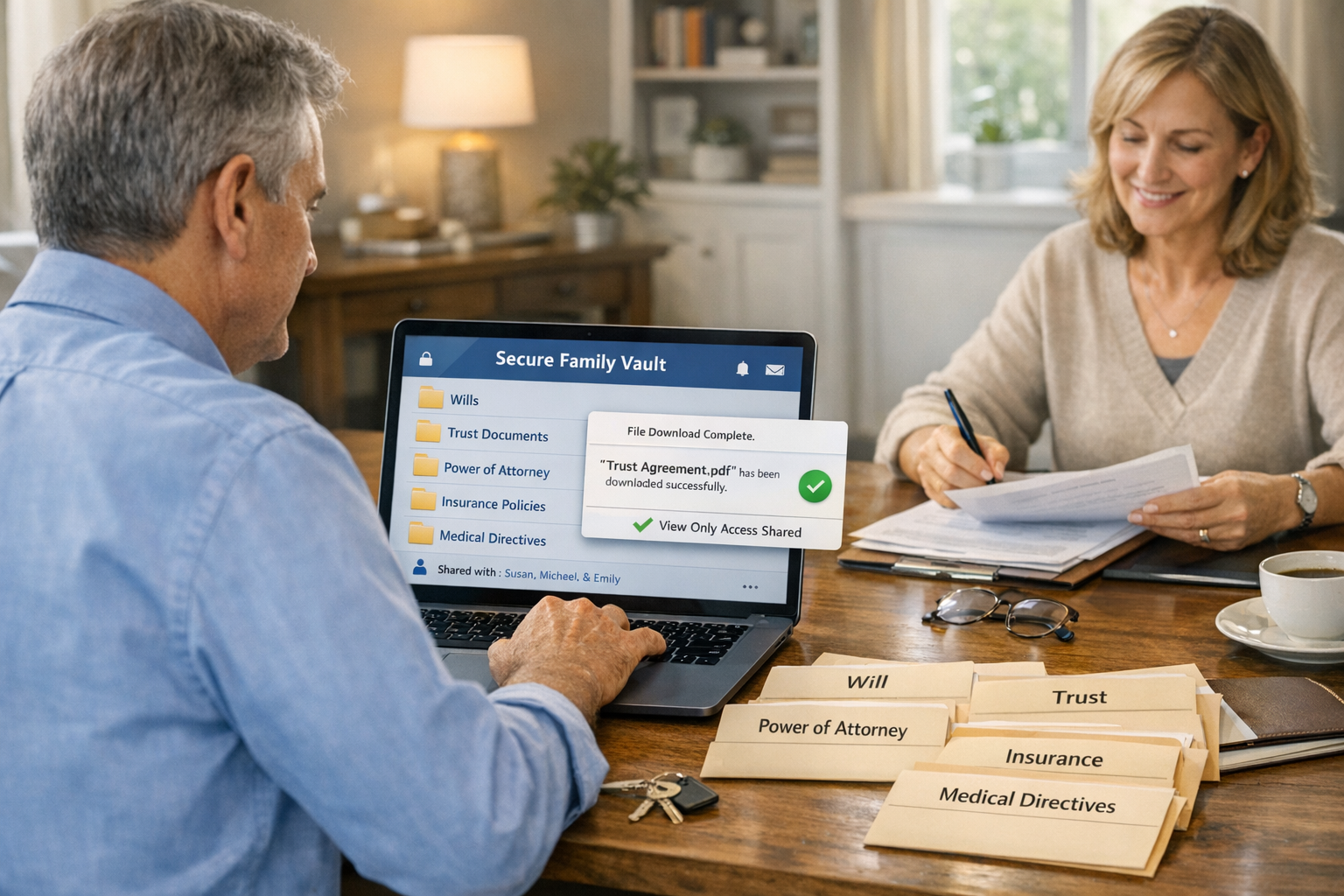
A family vault is a centralized system for storing and sharing critical information your loved ones may need in an emergency, after incapacity, or following a death. It can be physical, digital, or a blend of both. The goal is not just organization for its own sake. The goal is to help the right people act quickly and responsibly.
In many families, the challenge is not a lack of love or willingness to help. The challenge is access. People may not know where to begin. They may not know what exists, where it is stored, or who has authority to use it. That uncertainty can create delays, conflict, and unnecessary pressure during an already emotional time.
That is why family vault estate planning is so valuable. It helps bridge the gap between legal planning and practical action. Your will, trust, powers of attorney, and healthcare directives may establish your wishes and legal framework. Your family vault can support those documents by helping loved ones locate information and resources quickly.
- It can reduce panic during a medical or family emergency.
- It can help trusted people find time-sensitive information.
- It can make your estate plan easier to carry out.
- It can limit confusion about what exists and where it is kept.
- It can support smoother communication among family members and decision-makers.
Importantly, a family vault should be created carefully. You want to be organized without creating security risks. An attorney can help you think through what should be stored, how it should be stored, and who should know how to access it.
Place Emergency Cash, Spare Keys, and Safe-Deposit Details Thoughtfully
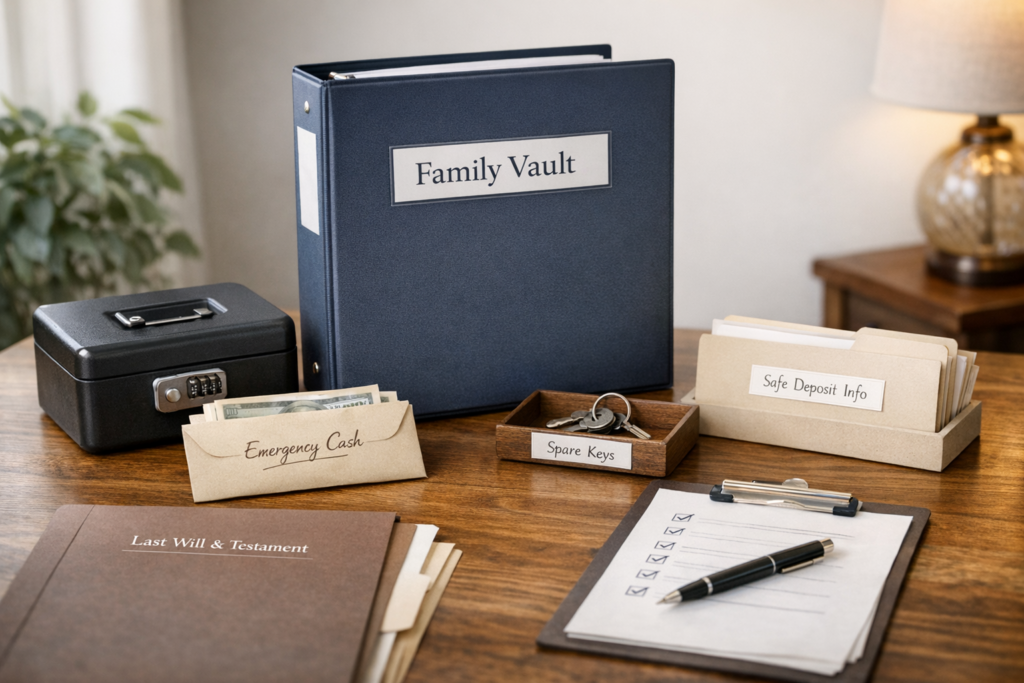
When people think about estate planning, they often focus on major assets and legal documents. But your article topic highlights something just as practical: place emergency cash, spare keys, and safe-deposit details where trusted loved ones can locate them if needed. These are small items that can make a big difference.
The key is to balance readiness with security. You do not want to leave sensitive items exposed, but you also do not want your family searching under stress with no guidance.
Emergency Cash
Emergency cash can be useful if your loved ones face immediate expenses or temporary disruptions. Power outages, urgent travel, last-minute transportation, food needs, and other practical costs can arise quickly. In some situations, digital payment systems or account access may be delayed.
That does not mean you should hide large sums of money around the house or rely on cash instead of proper financial planning. It means you may want a modest, intentional emergency reserve and clear instructions about where it is kept and who should know about it.
Consider these general planning points:
- Store emergency cash in a secure location, not in an obvious place.
- Make sure a trusted person knows that it exists and how to access it if appropriate.
- Keep a written note in your family vault identifying the location and purpose of the funds.
- Review the amount periodically and update your records.
- Discuss with an attorney how this practical step fits into your broader estate planning goals.
An attorney can help you think through whether your emergency cash plan aligns with your overall financial and estate documents, especially if you want specific people to have access under certain circumstances.
Spare Keys
Spare keys are easy to overlook until they become urgent. If a loved one needs to enter your home to care for pets, collect documents, manage deliveries, or secure the property, knowing where a spare key is located can save valuable time. The same may be true for vehicle keys, mailbox keys, or keys to a home office or filing cabinet.
Here again, secrecy alone is not a plan. If no one knows where your spare keys are, they may be effectively useless in an emergency. At the same time, you do not want to compromise your home security by leaving keys in predictable hiding spots or sharing access too broadly.
A better approach may include:
- Keeping spare keys in a secure, intentional location.
- Documenting their location in your family vault.
- Identifying which trusted person or people may access them.
- Updating the information if locks are changed or keys are replaced.
- Coordinating this information with any home security systems or alarm instructions.
If your estate plan names an agent under a power of attorney, trustee, or personal representative, it may be especially helpful to think through what practical access that person may need. A lawyer can explain the general role of these decision-makers and help ensure your planning materials are consistent.
Safe-Deposit Details
Safe-deposit boxes often hold exactly the kinds of items your family may need during a difficult time: original documents, heirlooms, deeds, titles, or other valuables. But a safe-deposit box can also create delays if your loved ones do not know it exists, where it is located, or what bank holds it.
In some cases, there may be legal or procedural limits on who can access a safe-deposit box and when. That is one reason it is so important not to assume your family will simply “figure it out.” Estate planning should include a clear record of safe-deposit details, along with legal guidance about access and authority.
Your family vault may include:
- The name and location of the bank or institution.
- The box number or identifying details, if appropriate.
- The location of the key, if one exists.
- Contact information for the institution.
- A general description of what the box contains.
- Notes about who may have access or who should contact an attorney for next steps.
Because rules and procedures can vary, this is an area where legal guidance matters. It is important to consult a lawyer rather than rely on assumptions about access rights.
What Else to Include in a Family Vault
While emergency cash, spare keys, and safe-deposit details are excellent starting points, a strong family vault estate planning system often includes a broader set of materials. The purpose is to create one reliable place where your loved ones can begin.
You may want to include a checklist or summary sheet with the location of:
- Your will, trust, and any codicils or amendments
- Financial power of attorney documents
- Healthcare directive or medical power of attorney
- Life insurance information
- Bank, investment, and retirement account summaries
- Mortgage, deed, and property records
- Funeral or memorial preferences
- Digital account instructions and password management information
- Contact information for your attorney, accountant, financial advisor, and insurance agent
- Pet care instructions
You do not need to place every original document in a single folder or hand over unrestricted access to everything. In fact, a lawyer may recommend keeping some materials in specific locations and using your family vault as a guide rather than a catch-all repository. The best setup depends on your situation, your assets, and your security concerns.
How to Build a Family Vault Without Creating New Risks
The desire to be organized is a strength, but estate planning works best when organization is paired with sound judgment. A family vault should simplify access for the right people, not expose your household to theft, privacy issues, or misuse.
As you think about your system, keep these principles in mind:
Choose Trusted People Carefully
Not everyone needs the same level of access. You may want one person to know where documents are kept, another to have healthcare authority, and another to manage financial matters. Your estate planning documents and your family vault should support each other.
Keep Information Current
An outdated family vault can create almost as much confusion as no vault at all. Review it regularly, especially after major life events such as marriage, divorce, a move, a death in the family, retirement, or significant financial changes.
Protect Sensitive Information
Be thoughtful about how passwords, account numbers, keys, and financial details are stored. In some cases, a secure password manager, locked file, or attorney-guided system may be more appropriate than a simple paper list.
Coordinate With Your Legal Documents
Your practical instructions should not conflict with your formal estate plan. For example, if your trust, beneficiary designations, or powers of attorney are outdated, a family vault alone will not solve the problem. An attorney can help make sure your planning is aligned.
What an Estate Planning Attorney Can Help You Do
Many people start with the practical side of planning because it feels manageable. That is a smart first step. But if you want your loved ones to act quickly and confidently, legal guidance can help turn your good intentions into a more complete plan.
An estate planning attorney may help you:
- Review whether you have the right foundational documents in place
- Update your will or trust based on your current goals
- Create or review powers of attorney and healthcare directives
- Think through who should have access to what information
- Address safe-deposit box concerns and practical access issues
- Organize your planning materials in a way that supports your family
- Reduce the risk of confusion, delays, or disputes later
This is not about perfection. It is about giving your family a clearer path forward. When legal documents and practical information work together, your loved ones may be in a much better position to respond when it matters most.
What to Expect When You Work With a Lawyer
If you have never met with an estate planning attorney before, you may be wondering what the process looks like. In general, it often begins with a conversation about your family, your assets, your goals, and your concerns. You can explain that your priority is creating an organized family vault so loved ones can act quickly.
Your attorney may ask about:
- Who you trust to make decisions if you cannot
- Whether you already have a will, trust, or powers of attorney
- Where important documents and valuables are currently stored
- Whether you use a safe-deposit box or secure home storage
- What practical problems you want to help your family avoid
From there, the attorney can recommend next steps based on your circumstances. That may include drafting or updating documents, clarifying roles, or helping you organize information in a way that is both practical and legally sound. It is important to remember that only a qualified attorney can advise you on how general estate planning principles apply to your situation.
How Get My Lawyer Today Can Help
You do not have to figure all of this out alone. If you are building a family vault estate planning system and want to make sure your loved ones can act quickly, Get My Lawyer Today can connect you with an attorney who understands estate planning and the real-life concerns families face.
The right lawyer can help you move beyond scattered notes and good intentions. They can help you create a plan that is organized, secure, and tailored to your household. Whether you are starting from scratch or updating an existing estate plan, having legal support may give you more confidence that your family will know what to do and where to turn.
Your desire to be prepared is not just about documents. It is about care, responsibility, and protecting the people who matter most. That is exactly the kind of planning worth doing well.
Take the Next Step Toward a More Organized Estate Plan
If you are ready to organize emergency cash, spare keys, safe-deposit details, and the rest of your essential planning information, now is a good time to speak with an attorney. Estate planning can be complex, and the right guidance may help you avoid oversights while making your plan easier for loved ones to use.
Connect with Get My Lawyer Today to find an estate planning attorney who can help you review your options, strengthen your legal documents, and build a family vault that supports your goals. When your family needs clarity most, thoughtful planning today may make all the difference tomorrow.