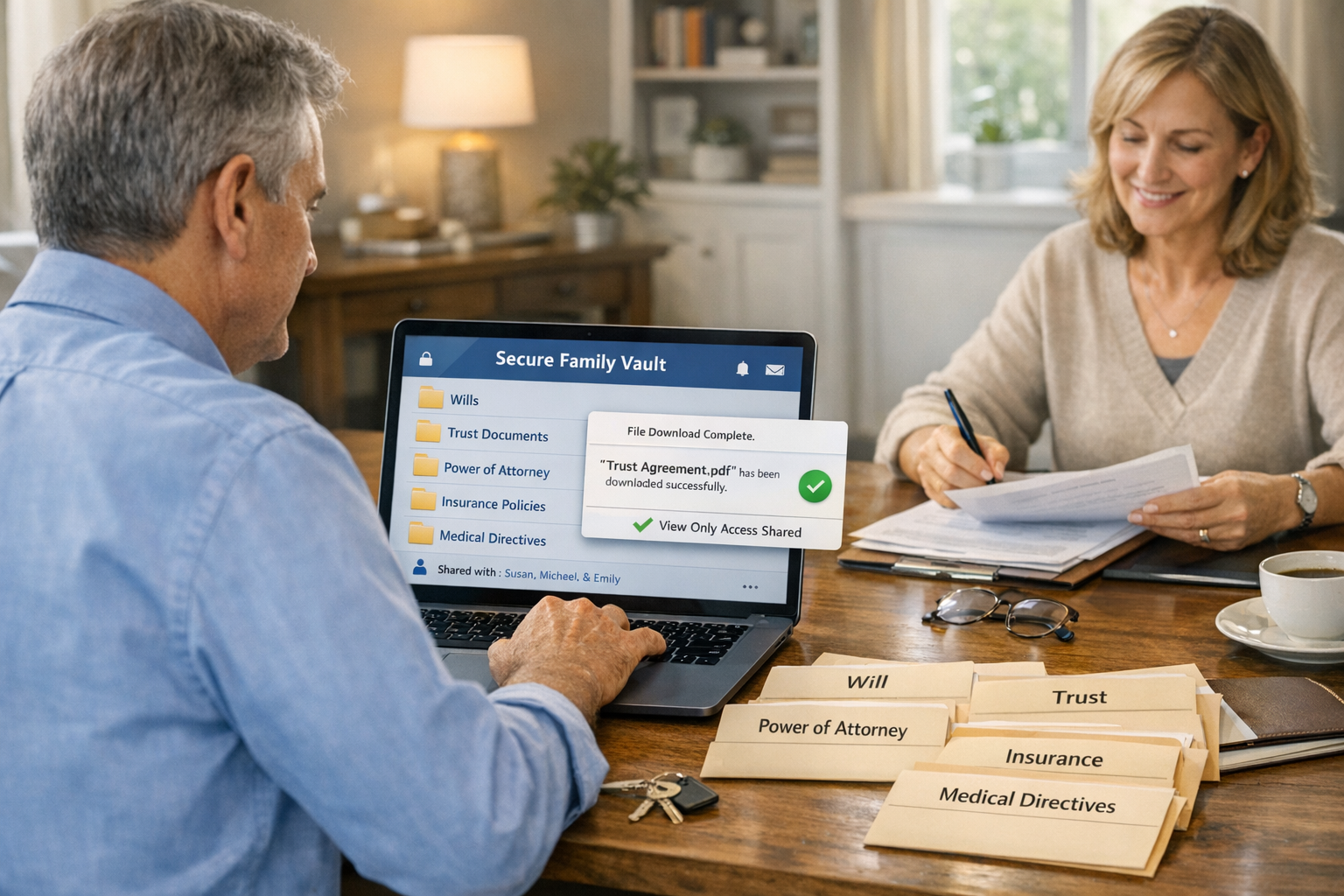
You have done something thoughtful and generous: you organized a digital family vault so the people you trust can find important documents when they need them most. That kind of preparation often comes from a powerful desire to protect your loved ones, reduce confusion, and make a difficult moment a little easier. If you are thinking ahead about how your family would locate wills, trusts, insurance records, deeds, passwords, medical directives, and other essentials, you are already taking an important step in the estate planning process.
But organizing documents is only part of the picture. An estate planning family vault works best when the right people can actually access what they need, when they need it, without delays or technical problems. That is why two practical steps matter so much: sharing view access with fiduciaries and testing a file download in advance.
If you are trying to create order now so your loved ones can act quickly later, you are not overthinking it. You are being proactive. Estate planning can feel deeply personal, and even a well-organized system can raise questions about privacy, authority, and legal responsibilities. A qualified estate planning attorney can help you make sure your digital organization supports your legal plan rather than creating avoidable confusion.
Why a Family Vault Matters in Estate Planning
An estate planning family vault is often a secure digital location where you store key documents and information related to your affairs. For many families, it becomes a central reference point during illness, incapacity, or after a death. Instead of forcing loved ones to search through filing cabinets, email inboxes, cloud drives, and password notebooks, a family vault can bring everything together in one place.
This can be especially valuable because estate administration and incapacity planning often involve multiple moving parts. The people helping you may need to identify assets, locate legal documents, contact institutions, and follow your instructions under significant emotional pressure. A well-prepared vault may help reduce:
- Delays in finding essential documents
- Miscommunication among family members
- Stress during emergencies
- Duplicate efforts and confusion
- The risk that important information is overlooked
Still, a vault is only useful if it is aligned with your legal documents and accessible to the right people. That is where careful planning becomes important.
Who Should Have View Access?
When people create a digital vault, one common question is who should be able to see it. In estate planning, the answer often depends on your fiduciaries and the role each person may play.
A fiduciary is someone entrusted to act in another person’s best interests. Depending on your planning documents and circumstances, that may include:
- An executor or personal representative named in your will
- A trustee of your trust
- An agent under a financial power of attorney
- An agent under a healthcare directive or medical power of attorney
- A guardian or conservator, if one is later appointed
These roles carry serious responsibilities. The person may need access to information quickly, but that does not always mean they should have full editing authority over every file. In many cases, sharing view access can be a smart starting point. It may allow the person to locate and review documents without increasing the risk of accidental deletion, edits, or disorganization.
That said, every estate plan is different. It is important to consult a lawyer about how your digital storage choices fit with your formal legal documents, account ownership, privacy concerns, and the authority your fiduciaries may or may not have under applicable law.
Why View Access Can Be Better Than Full Control
Many people assume the best approach is to give a trusted loved one complete access to everything. Sometimes that may be appropriate, but often a more limited permission setting can offer better protection while still helping your family act quickly.
View access can be helpful because it may:
- Preserve the original version of important documents
- Reduce accidental changes or deletion
- Create a clearer record of what was shared
- Protect sensitive information from unnecessary handling
- Support a more organized transition if authority changes later
For example, a successor trustee may eventually need broad access, but before that authority becomes active, a view-only arrangement may help them understand where things are without changing records prematurely. Likewise, an adult child helping with logistics may need to know where healthcare directives, insurance cards, or contact lists are stored, but not necessarily have unrestricted control over every file.
An estate planning attorney can help you think through who should receive access, what level of access makes sense, and how to coordinate those choices with your will, trust, powers of attorney, and healthcare documents.
What to Include in an Estate Planning Family Vault
Every family is different, but many people use an estate planning family vault to organize categories such as:
- Will and trust documents
- Financial power of attorney
- Healthcare directive or living will
- HIPAA authorization or medical release forms
- Insurance policies
- Property deeds and titles
- Bank and investment account information
- Business ownership records
- Marriage certificates, birth certificates, and other vital records
- Funeral or memorial preferences
- Lists of advisors, attorneys, accountants, and key contacts
- Secure instructions for accessing digital accounts
It is wise to keep the vault organized with clear file names, dated versions, and folders that make sense to someone else. What feels obvious to you today may be far less obvious to a grieving spouse, child, or fiduciary later.
Simple Organization Tips
- Use plain-language folder names such as “Will and Trust,” “Insurance,” and “Medical Directives”
- Add dates to file names so the most current version is easier to identify
- Archive outdated drafts separately to avoid confusion
- Include a summary sheet that explains what is stored where
- List emergency contacts and professional advisors in one easy-to-find document
These practical steps can make a major difference when time matters.
Why You Should Test a File Download
One of the most overlooked parts of digital estate planning is usability. A vault may look complete, but if a fiduciary cannot actually open, download, or identify the needed file, your preparation may not work as intended.
Testing a file download is a simple but meaningful step. It helps answer real-world questions such as:
- Can the person log in successfully?
- Can they locate the correct folder quickly?
- Do files download in a readable format?
- Are file names clear enough to identify the right document?
- Do permissions prevent access at the wrong moment?
- Is two-factor authentication manageable in an emergency?
Think of it like a fire drill for your estate plan. You are not expecting a crisis. You are making sure your system works if one happens.
Testing does not require sharing every sensitive detail with everyone. It may simply involve asking an authorized person to confirm they can log in, view a sample file, and download a noncritical document. If there is a problem, you can fix it now rather than leaving your loved ones to struggle later.
Common Problems a Download Test Can Reveal
Even carefully organized systems can have hidden issues. A download test may reveal problems like:
- Broken sharing links
- Expired invitations or outdated email addresses
- Confusing folder structures
- Unsupported file formats
- Password barriers no one can solve under pressure
- Missing documents you thought were uploaded
- Duplicate files with unclear version control
These are not signs that you failed. They are exactly the kinds of issues a test is meant to uncover. Estate planning is not just about creating documents. It is also about making those documents workable in real life.
Balancing Privacy With Readiness
Many people feel torn between wanting to protect privacy and wanting loved ones to be prepared. That tension is normal. You may want your affairs to remain private while you are living and capable, but you also want trusted people to avoid unnecessary roadblocks if they need to step in.
That is why thoughtful access design matters. Depending on your goals, you may want to discuss with an attorney:
- Which documents should be visible now
- Which documents should be restricted until a triggering event
- How your powers of attorney and trust provisions interact with digital access
- Whether sensitive account credentials should be stored separately
- How to document your intentions clearly for family members
A lawyer can help you think through these issues in a way that supports both privacy and preparedness.
How This Fits Into the Bigger Estate Planning Picture
Your digital vault should support your estate plan, not replace it. A vault can store information and make it easier for loved ones to find documents, but it does not take the place of legally valid planning instruments. For example, a folder labeled “my wishes” may not carry the same legal effect as a properly drafted and executed will, trust, power of attorney, or healthcare directive.
That is one reason it is so important to connect your organization efforts with legal guidance. If you have recently created a vault, it may be a good time to review whether your broader estate planning documents are current. Major life changes can affect what should be included and who should have access, including:
- Marriage or divorce
- Birth or adoption of children
- Blended family changes
- Buying or selling property
- Starting or selling a business
- Retirement
- Serious illness or caregiving changes
- Death or incapacity of a previously named fiduciary
If any of these apply, an estate planning attorney may help you evaluate whether your documents and digital systems still reflect your current wishes.
What to Expect When Working With an Estate Planning Attorney
If you are ready to strengthen your plan, working with an attorney can bring clarity and confidence. While each lawyer has a different process, many estate planning consultations involve discussing your family structure, assets, goals, and the people you trust to help if something happens.
An attorney may be able to help you:
- Identify the core estate planning documents you may need
- Review whether your existing documents are outdated
- Consider who should serve in fiduciary roles
- Coordinate your legal documents with your digital organization
- Address questions about privacy, authority, and access
- Reduce the risk of confusion for your loved ones
This kind of support can be especially helpful if your situation involves a blended family, business ownership, significant assets, special needs planning, or concerns about future incapacity.
Most importantly, an attorney can help you move from good intentions to a more complete and legally grounded plan.
How Get My Lawyer Today Can Help
You do not have to sort through estate planning questions alone. Get My Lawyer Today helps connect people with attorneys who understand how to approach planning with both compassion and practicality. If your goal is to create an estate planning family vault that truly helps loved ones act quickly, the right lawyer can help you think beyond storage and focus on legal readiness.
Through Get My Lawyer Today, you may be able to connect with an attorney who can help you:
- Review your estate planning documents
- Clarify fiduciary roles and responsibilities
- Evaluate digital access and document organization
- Update your plan after major life changes
- Create a more coordinated strategy for your family
That next step can bring peace of mind not only to you, but also to the people who may one day rely on the systems you put in place today.
Take the Next Step to Protect the People You Love
Your desire to stay organized and make life easier for your loved ones is meaningful. Sharing view access with fiduciaries and testing a file download may seem like small tasks, but they can make a real difference when timing, clarity, and calm matter most.
If you have built a digital vault, now is a smart time to make sure it works as part of a complete estate plan. If you have not started yet, you still have time to put thoughtful systems in place. Either way, an estate planning attorney can help you understand your options and create a plan that reflects your wishes.
Contact Get My Lawyer Today to connect with an estate planning attorney who can help you review your documents, evaluate access issues, and build a plan that supports your family when they need it most.