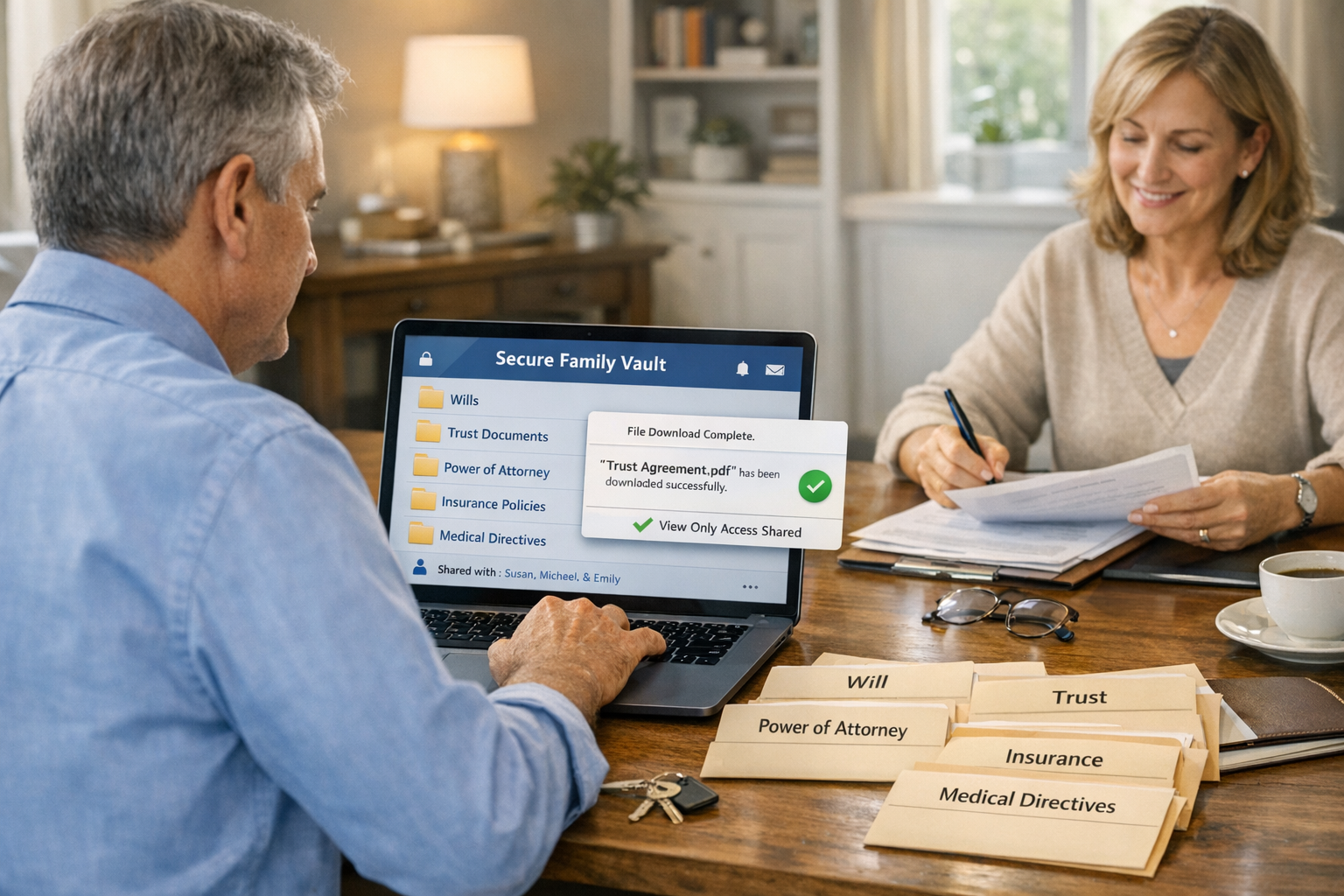
Fear can set in quickly after a loved one passes away, especially when you realize how many practical details need attention right away. If you are worried about missing property, inaccessible accounts, stolen mail, or digital and crypto assets that seem impossible to locate, you are not alone. Probate asset security is often one of the first and most urgent concerns families face, and it can feel overwhelming when emotions are already running high.
You may be asking yourself difficult questions: Who has access to the home? Are valuables still safe? What if bills, bank statements, or account notices are being delivered to an empty house? What happens if a phone, laptop, password manager, or crypto wallet is locked and no one can get in? These concerns are real, and they can create intense anxiety during an already painful time.
While every estate is different, taking practical steps to secure property, forward mail, and organize financial and digital information can help reduce confusion and protect what your loved one left behind. It is also important to remember that probate can involve legal duties and limits on what family members or potential heirs should do on their own. An attorney can help you understand your role, protect the estate, and avoid mistakes that could create conflict later.
Why fear about missing assets is so common in probate
Probate often begins before anyone has a complete picture of what the deceased person owned, owed, or stored across physical and digital spaces. A house may contain important paperwork, jewelry, collectibles, cash, keys, and financial records. At the same time, major assets may exist almost entirely online, including:
- Bank and investment accounts
- Retirement accounts
- Email accounts with financial notices
- Cloud storage containing estate documents
- Online payment platforms
- Cryptocurrency exchanges or private wallets
- Digital subscriptions and automatic payments
- Business accounts and websites
When access is unclear, families may fear that assets will disappear, be overlooked, or become harder to recover. That fear is understandable. In many probate matters, delay can make the process more complicated. Mail can pile up, vacant property can become vulnerable, and digital access can become even more difficult if devices are lost, disconnected, or reset.
That does not mean you should panic. It means you should approach the situation carefully, document what you find, and speak with a probate lawyer as early as possible.
Why changing locks and securing property may matter
One practical concern in probate is physical access to the deceased person’s home, apartment, office, storage unit, or other property. If multiple relatives, caregivers, neighbors, tenants, or service providers had keys, there may be uncertainty about who can enter and remove items. In some situations, family members are worried that property could be taken before the estate is fully inventoried.
Changing locks or otherwise securing the property may help preserve the estate, but the right approach depends on the circumstances. Ownership, occupancy, lease terms, court appointments, and local probate rules can all affect what should happen next. That is why it is important not to assume and not to rely on informal family agreements alone.
In general, an attorney may help you evaluate whether steps like these are appropriate:
- Changing locks on a vacant home
- Securing garages, sheds, and storage areas
- Documenting valuable personal property
- Taking photographs or video of rooms and contents
- Preserving financial papers, deeds, titles, and insurance records
- Protecting vehicles, safes, and access devices
- Notifying insurers that the property may be vacant
These actions are not about secrecy or control. They are about protecting the estate and reducing the chance of loss, misunderstanding, or accusations later in the probate process.
Why documentation is just as important as security
If you are worried about missing or inaccessible assets, documentation can be one of the most valuable early steps. Even before a full probate inventory is prepared, keeping careful records may help show what was present, what was secured, and what actions were taken.
Helpful documentation may include:
- Photos of the property and its contents
- A written list of visible valuables and important documents
- Notes about who had keys or access codes
- Dates when locks were changed or mail was forwarded
- Lists of devices found, such as phones, tablets, and laptops
- Copies of any notices from banks, creditors, or service providers
This kind of organization can be especially useful if disputes arise among heirs or if questions come up about whether assets were protected properly.
Why forwarding mail can be a critical probate step
Mail may seem like a small detail compared to real estate or investment accounts, but it can play a major role in probate asset security. Important information often continues to arrive by mail after death, including account statements, tax documents, insurance notices, bills, dividend checks, and correspondence from creditors.
If mail is left unattended at an empty property, several problems can develop:
- Identity theft risks may increase
- Financial statements may be missed
- Time-sensitive notices may go unanswered
- Automatic payments and debts may go unnoticed
- Evidence of assets may be lost or discarded
- A vacant property may become more obvious to outsiders
Forwarding mail or arranging secure mail management may help the personal representative or family identify accounts, locate obligations, and preserve a clearer picture of the estate. However, there may be rules about who is authorized to make these arrangements and when. A probate lawyer can help you understand what is appropriate based on the estate’s status and your authority.
What mail can reveal about hidden or overlooked assets
Families are often surprised by how much financial information still arrives in paper form. Even in a digital world, mailed documents may reveal:
- Unknown bank or brokerage accounts
- Life insurance policies
- Property tax notices
- Safe deposit box information
- Cryptocurrency exchange communications
- Loan statements or liens
- Business records and vendor accounts
- Subscription services with stored payment methods
In probate, these clues can be extremely important. They may help identify estate assets, uncover debts, or point to digital accounts that need attention.
Digital assets and crypto can add another layer of stress
For many families, the greatest fear is not the house or the mail. It is the possibility that major assets exist online and no one knows how to access them. Digital assets may include everything from online banking and investment portals to social media accounts, cloud storage, domain names, and cryptocurrency.
Crypto assets can be especially stressful because access may depend on private keys, seed phrases, device authentication, or exchange logins. If a wallet exists but no one can locate the credentials, families may worry that substantial value could be permanently out of reach.
This is one of the clearest reasons to involve a probate attorney early. While a lawyer cannot guarantee access to every account, they can help you take lawful, organized steps to identify what exists, preserve evidence, and pursue the proper channels for access.
General concerns that often arise with digital and crypto assets include:
- Locked phones or computers
- Unknown passwords or password managers
- Two-factor authentication tied to an inaccessible device
- Email accounts needed to reset other logins
- Crypto exchange accounts with no visible login information
- Private wallets stored on hardware devices
- Unclear ownership of digital business assets
- Questions about privacy laws and provider policies
It is important to avoid guessing, deleting data, or taking actions that could unintentionally lock an account further or create legal complications. A lawyer can help coordinate a careful, compliant approach.
What your legal options may look like in general
Probate is the legal process used to administer a deceased person’s estate. Depending on the situation, the court may appoint a personal representative, executor, or administrator to gather assets, address debts, and distribute property according to a will or state law. If you are concerned about missing or inaccessible assets, you may have options to protect the estate while the process unfolds.
Those options will depend on factors such as:
- Whether there is a valid will
- Who has been formally appointed by the court
- Whether the property is vacant or occupied
- Whether there are disputes among family members
- Whether assets are held jointly or have beneficiary designations
- Whether digital assets can be identified through records or devices
- Whether there are signs of theft, misuse, or concealment
An attorney can help determine what steps may be available to secure property, preserve records, request information, and move the probate process forward. The key point is that you do not have to navigate these issues by instinct alone.
What to expect when working with a probate attorney
If fear is making it hard to know where to begin, speaking with a probate attorney can bring structure to a chaotic situation. A lawyer can help you understand what matters most right now, what should be documented, and what actions should wait until proper authority is in place.
When you work with a probate attorney, the process may include:
- Reviewing whether probate is necessary
- Identifying who has legal authority to act for the estate
- Discussing immediate concerns about the home, mail, and valuables
- Helping create an inventory of known and suspected assets
- Guiding communication with financial institutions and service providers
- Addressing questions about digital accounts and crypto holdings
- Helping reduce the risk of disputes, delays, and missteps
Just as importantly, a lawyer can help you separate urgent tasks from assumptions. That can be a major relief when you are grieving and trying to protect your loved one’s legacy at the same time.
Questions you may want to ask
When you connect with a probate attorney, consider asking questions like:
- Who is authorized to secure the property right now?
- Should locks be changed, and if so, when?
- How should mail be forwarded or monitored?
- What should be done with devices, passwords, and digital records?
- How can suspected crypto assets be identified and preserved?
- What documentation should be gathered first?
- What should family members avoid doing?
These questions can help you move from fear to a more informed, manageable plan.
Simple steps that may help you stay organized
Although legal guidance is important, there are also practical habits that may help you stay organized while waiting for next steps. In many probate situations, calm recordkeeping can make a meaningful difference.
You may want to create a central file that includes:
- The death certificate
- Any will, trust, or estate planning documents you can locate
- A list of all known properties and addresses
- Names of banks, brokers, insurers, and advisors
- Photos of valuable items and important paperwork
- A list of devices and where they were found
- Notes about mail received after death
- Any evidence of online accounts or crypto activity
Even if the information feels incomplete, gathering it in one place can help an attorney assess the probate matter more efficiently.
How Get My Lawyer Today can help
When you are worried about missing assets, inaccessible digital accounts, or the security of a loved one’s property, the hardest part is often knowing who to call first. Get My Lawyer Today helps connect people facing probate concerns with attorneys who understand estate administration, asset protection, and the practical challenges that arise after a death.
Instead of trying to sort through everything on your own, you can take a more confident next step by speaking with a lawyer who can evaluate the situation, explain the process, and help protect the estate appropriately. Whether your concerns involve changing locks, forwarding mail, locating financial records, or dealing with digital and crypto assets, the right legal guidance can make the path forward clearer.
You do not need to have every answer before reaching out. You just need a place to start.
Take the next step to protect the estate
If you are feeling afraid that property could be lost, mail could be missed, or digital assets could disappear into the unknown, trust that your concern is valid. Probate asset security is not just about preserving value. It is about protecting a loved one’s legacy and reducing unnecessary stress during a difficult time.
Because probate rules and authority can vary, it is important to consult a lawyer before taking major action. An attorney can help you understand your options, avoid preventable mistakes, and move forward with more confidence.
Contact Get My Lawyer Today to connect with a probate attorney who can help you address missing or inaccessible assets, secure property, and protect what matters most.